Every spring in Gastonia, the pressure washer comes out and everything outdoors gets pointed at: the driveway, the deck, the roof, the windows, the grill, the car. Some of those targets are fine. Others are damaged by exactly the force that makes concrete come clean, and the damage often shows up weeks later as a leaking window, curling shingles, or paint peeling in sheets. Knowing the never list is worth more than any technique tip.
This piece is organized as a year-round reference rather than a single-season warning, because the risky targets change with the calendar. Pollen season tempts people to wash screens and windows. Summer brings decks and outdoor equipment. Fall means roofs and gutters. The table below pairs each common target with what the water actually does to it and what to do instead.
The four categories that always say no
Window seals sit at the top of the list. The seals around double-pane glass and the caulk and flashing at the frame were not built to resist a concentrated jet. High pressure can break the seal between panes, which shows up later as fogging that no cleaning can fix, and it can drive water into the wall around the frame. Roof shingles are second: a pressure stream lifts the granules that protect asphalt shingles from the sun and can force water under the laps, trading a stained roof for a shorter roof life and a possible leak.
Painted surfaces are third. Pressure finds every weak edge in a paint film and peels it, often unevenly, and it soaks the bare wood underneath, which then needs days of drying before repainting can even start. Fourth is anything electrical or delicate by design: exterior outlets, light fixtures, doorbell cameras, HVAC condenser coils with their thin fins, and the vents and seals on vehicles and grills. Water under pressure goes places rain never reaches.
The never list, by season
| When it tempts you | Target | What pressure does | Do this instead |
|---|---|---|---|
| Spring pollen season | Window screens and sealed windows | Bends screens, breaks pane seals, drives water past frames | Remove screens and rinse gently; wash glass with a soft wash or by hand |
| Spring | Painted porches and trim | Peels paint film and soaks bare wood | Soft wash; repaint prep is a scraper and sander, not a wand |
| Summer | Asphalt shingle roofs | Strips protective granules, forces water under shingles | Low-pressure roof treatment applied from a safe position |
| Summer | HVAC units and electrical boxes | Bends coil fins, pushes water into electrics | Gentle hose rinse on coils; keep wands away from boxes |
| Fall | Gutter interiors at full blast | Dents thin metal, blows seals at joints and end caps | Scoop and hose-flush gutters; reserve cleaning for exteriors at low pressure |
| Year-round | Cars, grills, and outdoor equipment seals | Forces water past gaskets into bearings and electrics | Bucket, sponge, and garden hose pressure only |
The gray areas
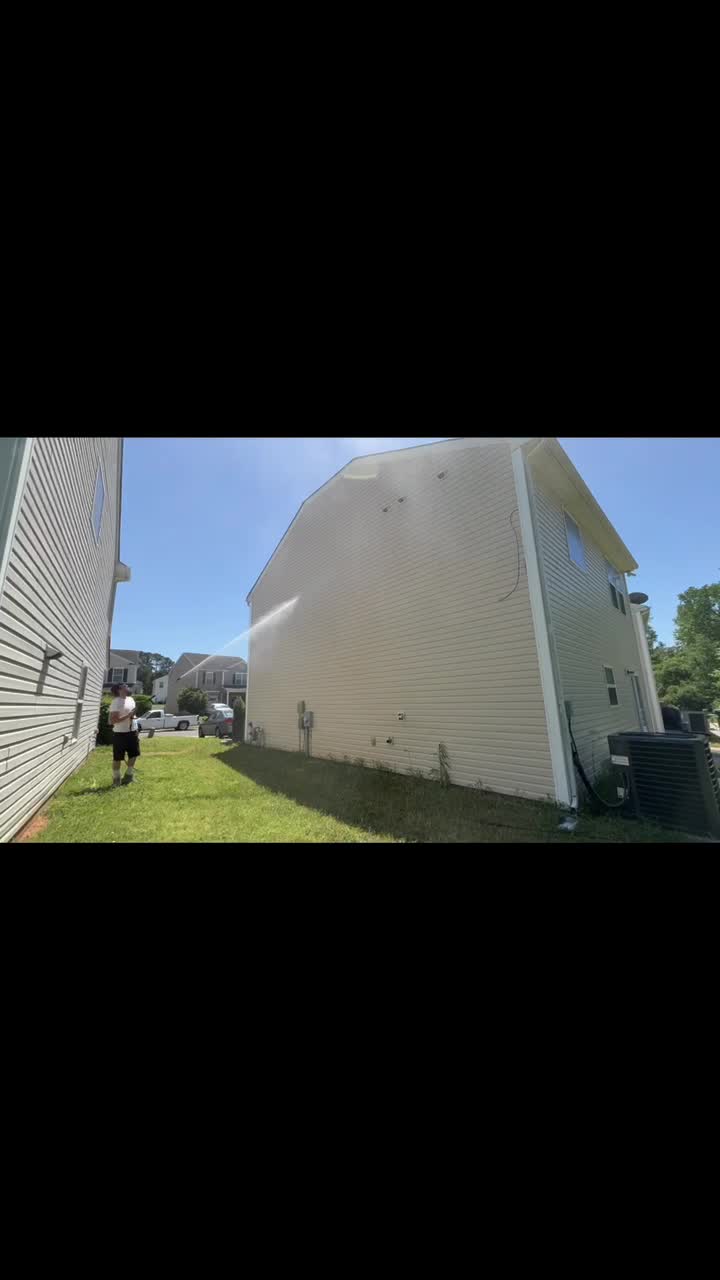
A few targets are fine with the right setup and risky with the wrong one. Concrete is the classic safe surface, yet even concrete can be etched by a pinpoint tip held close, and new concrete in its first year is softer than old. Vinyl siding washes well at low pressure with solution, the method shown in the photo above, but a high-pressure stream aimed upward can force water behind the laps. Composite decking tolerates gentle washing but can be scarred by a narrow tip, and its manufacturer guidance usually caps pressure well below what a driveway takes.
The pattern is consistent: the question is rarely the machine, it is the pairing of pressure, tip, distance, and material. When in doubt, the test is the same as anywhere else. Start wide, low, and far away on a hidden spot, and stop if the surface changes texture.
A safer way to use the machine you own
Homeowner machines cause most of the damage on this list because the tips get swapped casually. Keep the widest fan tip as your default, treat the narrow tips as concrete-only, and never lend the machine without saying so. Work standing on the ground whenever possible, since a wand at ladder height combines a fall risk with poor control. And for the true never list, let a professional service like Novelli Pressure Washing LLC handle the surface with the low-pressure method built for it.
Common questions
Can pressure washing really ruin a window?
Yes. A concentrated jet can break the seal between double panes, leading to permanent fogging, and can push water around the frame into the wall. Glass should be cleaned gently, never blasted.
Is it safe to pressure wash a roof to remove black streaks?
No. The streaks are algae, and they respond to a low-pressure treatment. Blasting strips the granules that protect the shingles and can shorten the roof's life.
What about my car's engine bay or patio furniture?
Keep pressure away from engine electrics and seals. Patio furniture depends on material: metal and hard plastic usually tolerate a wide, gentle fan from a distance, while wicker, fabric, and painted finishes do not.
← All guides from Novelli Pressure Washing LLC← Back to Novelli Pressure Washing LLC